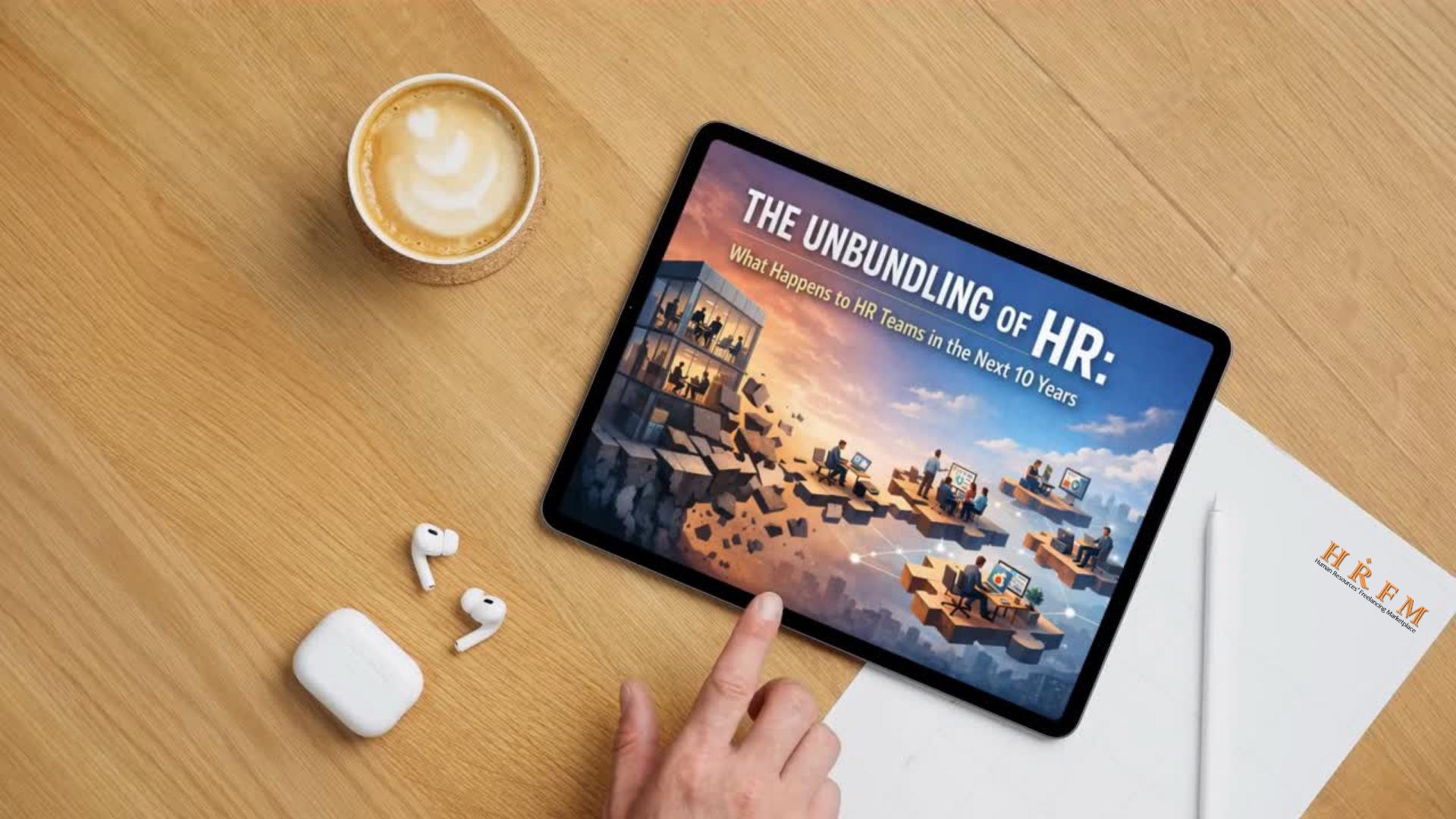
Human Resources is going through a structural shift. Over the next decade, HR will move away from large, centralized teams toward a more flexible model—where a smaller core team works alongside specialized, on-demand expertise. This article explores why HR is becoming “unbundled,” what it means for organizations, and how HR teams will evolve in the years ahead.
For decades, we have designed HR teams around a simple assumption:
Most HR work should be done by a permanent, internal department.
This made perfect sense in a world where:
Organizations were more stable
Change was slower
Skills evolved gradually
And most HR work was operational and repetitive
But that world is quietly disappearing.
Over the next 10 years, HR will not become less important.
It will become more important, more complex, and more strategic.
And that is exactly why:
The way HR work is organized will fundamentally change.
A Pattern We’ve Already Seen in Other Functions
Before we talk about HR, look at what already happened to:
Technology
Marketing
Design
Finance
In the past, companies tried to:
Build everything in-house
With large, permanent teams
Today, most modern organizations operate very differently:
A strong internal core owns:
Strategy
Architecture
Direction
And a flexible external layer provides:
Specialized skills
Surge capacity
Project-based execution
This is called unbundling.
Not because the function becomes weaker —
But because:
Different types of work need different types of structures.
Why HR Is Naturally Headed in the Same Direction
HR work today is no longer:
Just payroll
Just hiring
Just administration
Modern HR includes:
Employer branding
Culture and change
Performance systems
Leadership development
Compliance and governance
Organization design
Compensation strategy
Employee experience
Analytics and systems
No single team — no matter how good — can be:
Deeply specialized in all of this, all the time.
And more importantly:
The demand for these skills is irregular and situational.
You don’t need:
A full-time culture transformation expert every year
A full-time JD architecture specialist every month
A full-time compliance overhaul team forever
But when you do need them, you need them at a very high level.
The Economic Reality Nobody Likes to Say Out Loud
If a company tries to:
Permanently internalize all possible HR capabilities
It will become:
Expensive
Slow
Politically complex
And still incomplete
If a company tries to:
Permanently outsource everything
It will lose:
Context
Control
Trust
And strategic coherence
So the only stable long-term structure is:
A strong internal HR core + a flexible, on-demand execution ecosystem.
What the Future HR Team Actually Looks Like
In the next 10 years, most effective HR organizations will look like this:
The Internal Core Team
They will own:
Strategy and priorities
Governance and standards
Culture and leadership agenda
Vendor and partner orchestration
Quality control and integration
Institutional memory
They will be:
Smaller, more senior, more strategic, and more influential.
The External Execution Layer
This will include:
Specialists
Project experts
Niche consultants
Domain practitioners
They will be:
Brought in for specific outcomes
For specific durations
With specific scopes
And then:
Rotated out again
This Is Not “Outsourcing HR”
This is a crucial distinction.
Outsourcing means:
Giving ownership away.
Unbundling means:
Keeping ownership, but changing how execution is assembled.
Internal HR does not become weaker in this model.
It becomes the architect and conductor, not the entire orchestra.
Why This Will Happen Even If Companies Resist
Because three forces are unavoidable:
1) Complexity Is Increasing
Organizations are becoming:
More regulated
More skill-diverse
More dynamic
2) Speed Is Becoming Critical
Annual or multi-year HR transformation cycles are:
Simply too slow for modern business reality.
3) Talent Is Becoming More Specialized
The best expertise will increasingly:
Live in networks
Live in independent practices
Live outside any single company
The New Core Skill of HR Leaders
In the old world, great HR leaders were:
Great builders of teams.
In the new world, great HR leaders will be:
Great orchestrators of capability.
They will be judged not by:
How many people report to them
But by:
How effectively they can assemble the right expertise at the right time
What This Means for Companies Today
Most organizations are currently:
Halfway between two worlds
With:
Old structures
New problems
This is why:
HR feels overloaded
Initiatives move slowly
And execution quality is inconsistent
Not because people are incompetent.
But because:
The operating model is outdated.
A Final Thought
The future of HR is not:
Bigger departments
Or total outsourcing
It is:
Smaller, stronger cores surrounded by flexible, high-quality execution ecosystems.
The unbundling of HR is not a trend.
It is a structural response to how organizations, skills, and work are changing.
The only real question is:
Who will learn to operate this model first — and who will be forced into it later by crisis?